Module 2 · HOW YOU COME OFF · Lesson 1 of 2
The read
Everybody gets read in about three seconds. Most people never find out what they are putting out.
Lesson 3 of 12
Start here
Two people walk into a corner store thirty seconds apart.
The first one comes in fast, hood up, hands in his front pocket, looking around the ceiling for the camera before he looks at anything else. He does not say anything to the man behind the counter.
The second one comes in, nods at the counter, walks to the back, hands out, takes his time.
Same age. Same neighborhood. Same nothing in their pockets.
Which one gets watched? And here is the real question. Which one were you, the last three times you walked into a store?
Everybody reads everybody
This is not a police thing. Humans do this to each other constantly and it is not optional.
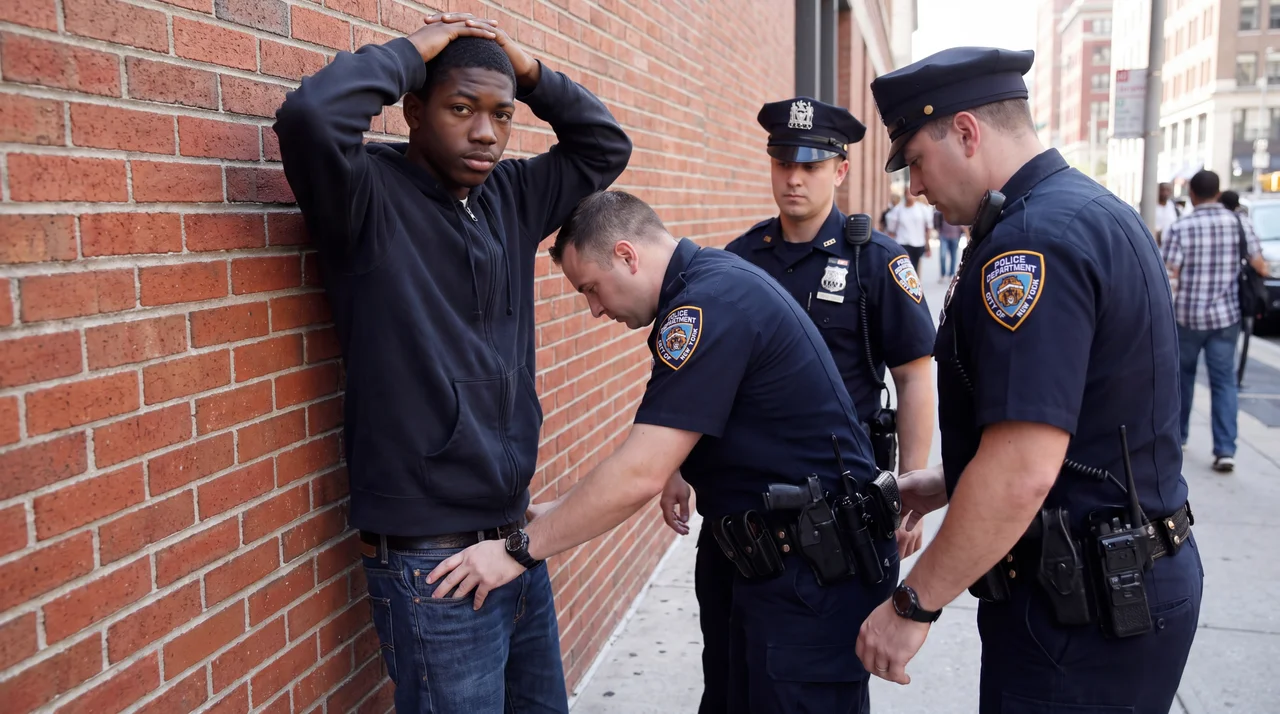
Somebody who has never met you builds a picture of you in about three seconds and they build it out of a short list. Where your hands are. Whether your eyes are moving. How fast you are moving. How much space you take. Your volume before they have heard a single word you said.
None of that is your character. All of it is the material they are working from.
And here is the thing almost nobody realizes. Most of that list is adjustable. Not who you are. What you are broadcasting.
What actually gets read
Go through them one at a time, because you cannot manage what you have never named.
Hands. First thing, every time. Visible or not visible. That is the whole binary and it is doing more work than everything else combined.
Eyes. Where they go and how fast. Scanning reads as looking for something. Locked reads as challenge. Steady and normal reads as normal.
Speed. Fast movement reads as either fleeing or reaching, and both of those are the wrong answer.
Space. How close you get, how you square up, whether your body is facing somebody or angled off.
Volume, before content. People decide how you feel from your volume and your pitch before they process a single word. You can say something completely reasonable in a tone that gets you handcuffed.
And what is around you. Who you are with. How many. What they are doing while you are talking.
The part that is not fair
There is a second layer and pretending it does not exist would make this whole course useless.
You are also read through a filter you did not build. Research on this is not ambiguous. Young men who look like you get read as older than they are, bigger than they are, and angrier than they are. A fourteen year old gets seen as a seventeen year old. A neutral face gets read as hostile.
That is not your fault and there is no version of you that switches it off.
It is also the room you are standing in. Both of those are true and Module 1 already taught you how to hold two true things.
So the question is not whether it is fair. The question is whether you are going to walk in knowing it or not knowing it. Somebody who knows can adjust. Somebody who does not know spends his life confused about why rooms react to him the way they do.
This is a skill, not a leash
Say this part out loud if you have to.
Reading a room and controlling what you project is one of the most valuable skills a person can have.
It closes job interviews. It gets you believed in a principal's office. It is why some people can walk into a room where nobody knows them and have everybody comfortable in a minute. That is not luck and it is not personality. It is a skill and people who have it get more of everything.
You are learning it in the hardest possible context, which means when you use it anywhere easier it is going to feel like a cheat code.
The test for whether you are doing it right. If you are managing how you come off because you chose to, that is command. If you are shrinking because you are scared, that is damage. Same behaviors on the outside. Completely different thing on the inside, and you are the only one who knows which one you are running.
You cannot control the filter. You can control the material it is working with.
The workEight questions
Two of these nobody reads. They are marked.
Go back to the corner store. Write which of the two you usually are, honestly, and what you are usually thinking when you walk in.
You get told to wait outside an office at school. Somebody walks past and looks at you. What is your face doing?
- ANothing. I have a resting face and I know it reads hard
- BI would look back longer than I needed to
- CI would look away
- DI genuinely do not know, and that is the honest answer
When somebody reads you wrong, what do you feel first? Not what you do. What you feel.
Ask two people who know you what you look like when you are annoyed. Write down exactly what they say, in their words.
Of the six things in section two, hands, eyes, speed, space, volume, and who is around you, pick the one you have the least control over. Write why.
You are walking home at night and an officer pulls up alongside and rolls the window down. Before he says anything, what do you do with your hands?
- AOut of my pockets, at my sides, where he can see them
- BLeave them where they are. I have done nothing
- CI would not have thought about it until right now
- DDepends who is with me
Have you ever been read correctly and hated it? What did they see?
Write one situation this week where you are going to run this on purpose. Not with police. A teacher, a manager, somebody's parent, an interview.
DeeperThree reflections
Nobody reads these.
- 1
Write about the first time you understood that people saw you differently than you saw yourself. How old were you and what happened.
- 2
Somebody in your life is very good at this skill. Write who, and write three specific things they do.
- 3
Write what you want people to read off you at twenty five. Then write what they would read off you today.
Before you go
Most people go their whole lives without ever seeing themselves from the outside. They know what they meant. They never find out what they showed.
That gap is where almost every avoidable problem lives, and not just with police. It is the reason somebody gets fired for a tone he did not know he had, and the reason somebody else gets a job he was not the most qualified for.
Next lesson you are going to see yourself on video and most people find it uncomfortable. Do it anyway. Twenty minutes of discomfort against a skill you keep forever is not a difficult trade.
Have somebody film you on a phone for sixty seconds, twice. Once telling a normal story. Once telling somebody about something that made you angry. Watch both with the sound off, then again with the sound only. Write down one thing that surprised you.