Module 3 · THE FIRST TEN SECONDS · Lesson 2 of 2
Buying the second
You will not think your way through it in the moment. Decide now.
Lesson 6 of 12
Start here
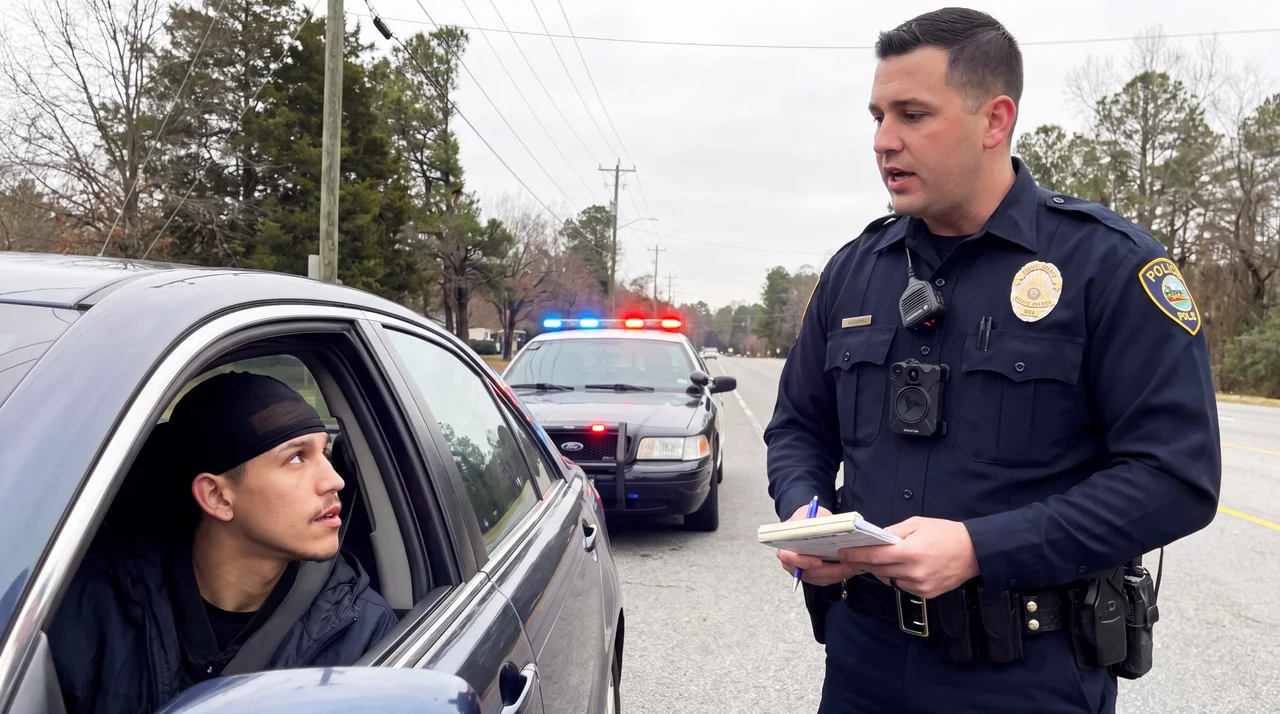
Blue lights, and this time there is a warrant you did not know about, on a ticket you forgot about two years ago.
The officer comes back from his car with a different voice than he had the first time. He tells you to step out.
Everything you do in the next five seconds decides how the next two years go. What is your first move?
The plan gets made now or it does not exist
You are not going to reason your way through that moment. Nobody does. Your hearing is narrowed and your hands are unreliable and time is not running at normal speed.
Which means the decision has to already be made. The only version of you that gets to decide anything is the version sitting here reading this, calm, with time.
That is not a limitation. That is an enormous advantage and almost nobody uses it. You get to make the decision under good conditions and then just execute it under bad ones.
What buying the second actually looks like
It is physical. It is not a thought.
Breathe out first, not in. Most people take a big breath in when they are scared, which does nothing. A long breath out is what actually brings the heart rate down, and it takes about four seconds.
Put your hands somewhere on purpose. Wheel, or out at your sides. A decided position, not wherever they end up. This is the single most useful physical habit in the whole course.
Say one short thing. Yes sir. My hands are on the wheel. Speaking at a normal volume is a way of telling your own body where the level is.
Then wait. Not thinking. Waiting. There is a difference and the difference is that waiting is a thing you can do when you cannot think.
Those four take about six seconds together and they are the whole technique.
Practice it before you need it
A plan you have never physically done is not a plan. It is an idea, and ideas do not survive the first ten seconds.
Do it in a parked car. Sit down, put your hands where they go, breathe out, say your sentence out loud. Ten times. It feels ridiculous and that is fine, it is supposed to, and you will not be doing it for the first time on the night it matters.
Do it with somebody watching, because doing it in front of another person is a different thing than doing it alone.
And do it when nothing is wrong. A habit built only in emergencies is not a habit.
What this is not
This is not calming down. Calm down is not an instruction, it is an outcome, and telling a person to calm down has never once worked.
You are not trying to feel different. You are buying six seconds while feeling exactly what you feel. Furious, terrified, humiliated, all of it. The technique works fine at full volume on the inside.
And it is not surrender. Six seconds does not decide the argument, it does not concede anything, it does not mean the officer is right. It means you did not hand him the moment.
Every part of this course that comes after depends on this. Rights are useless if your body already moved. The five moments in Module 5 are all the same moment: the one where the automatic answer is expensive and you took a second instead.
A plan made in the moment is a wish. Make it now.
The workEight questions
Two of these nobody reads. They are marked.
Go back to the warrant scenario. Write your first three moves, in order.
Write your plan. Where your hands go, the breath, the sentence you say. Exact words.
What are you actually afraid of in that scenario? Not the arrest. Under it.
You are on foot, at night, and an officer says hey, come here. Automatic answer first, honestly.
- AKeep walking, I have done nothing
- BStop and see what he wants
- CAsk if I am free to go
- DMy legs would move before I decided anything
Which part of the six seconds will be hardest for you?
- ABreathing out. I would forget
- BMy hands. They move on their own
- CSaying something at a normal volume
- DWaiting. I would want to fill it
Has your automatic response ever put somebody else in danger? What happened?
Who is the one person you could call after something like this, who would pick up? Name and number, written down.
When and where are you going to practice this week? Day, place, and how many times.
DeeperThree reflections
Nobody reads these.
- 1
Write the warrant scenario all the way through, as if it happened, with you doing it the way you want to do it. All of it, start to finish.
- 2
Write about the last time you were genuinely afraid and had to keep functioning. What did you do that worked.
- 3
Write what six seconds would have been worth in a situation you have already lived through.
Before you go
You now have a physical thing to do that takes six seconds and that you can do while feeling anything at all. That is more than most adults walking around have.
It is worth almost nothing until you have physically done it a few times, and it is worth a great deal after that. This is the one week of the course where the assignment is the lesson.
Everything from here needs those six seconds to already be automatic, because the next three modules are about what you do inside them.
Ten times, in a parked car, out loud. Then once with somebody watching you. Write down what felt stupid about it and do it anyway.